A good knife can last decades if it's used correctly. Most knives that end up dull, chipped, or rusted within a year don't have a quality problem, they have a habit problem. A few small, seemingly harmless routines, repeated daily, do more damage to a blade than heavy, careful use ever would.
Avoiding most of them doesn't take any special knowledge, just knowing what they are, since many of them look like ordinary kitchen habits rather than mistakes. Below are the most common ones, why each matters, and what to do instead.
Glass, Ceramic, or Stone Cutting Boards
This is the most common mistake, and also the easiest to fix. Glass, ceramic, marble, and granite are extremely hard surfaces, harder than the steel of the blade. Every time you cut, the edge strikes a surface that doesn't give at all, and the fine edge of the blade dulls or micro-chips. The effect shows up fast, sometimes after just a few cutting sessions.
Manufacturers explicitly recommend avoiding these surfaces. Victorinox states clearly in its own care guide that hard surfaces made of natural or artificial stone should be avoided because they dull the blade, and recommends wood or plastic instead. Shun goes further: the surfaces it advises against include tile, ceramic, marble, granite, any kind of glass, and even synthetic boards, since it prefers soft wood.
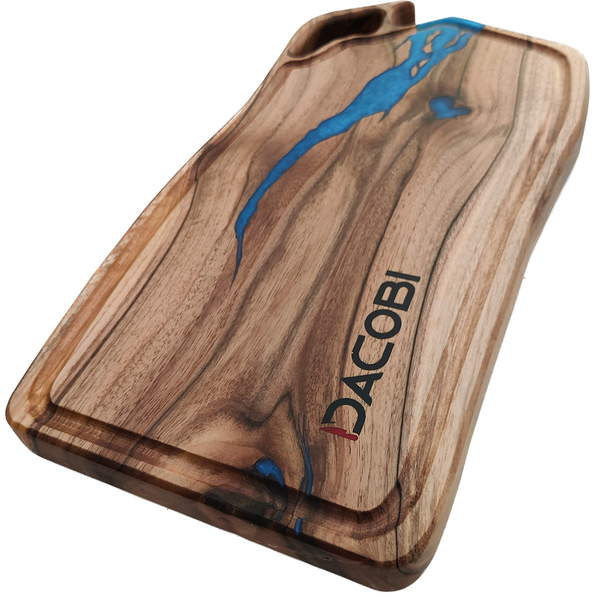
Wood behaves differently: the fibers absorb part of the impact, so the edge essentially rests in the surface rather than on it. Plastic is harder than wood but far softer than stone or glass, so it's an acceptable choice, even if not the ideal one.
Between wood and plastic, the difference is more about maintenance than blade protection. A solid wood board without deep cuts from years of use needs occasional oiling with food-grade mineral oil so it doesn't dry out and crack, and it should never be soaked in water. A plastic board is easier to wash, but wears down over time into fine grooves that trap food debris, which is why it's worth replacing once the surface is visibly scratched.

Washing Knives in the Dishwasher
A dishwasher cycle combines three things that don't mix well with a good knife: water pressure that knocks the blade against the cutlery basket and other items, high drying heat, and concentrated detergents, often abrasive, that can pit wooden handles and attack the steel's protective layer.
Premium knife makers recommend washing by hand. Even Victorinox, which lists its household knives with synthetic handles as dishwasher-safe, recommends washing all large knives by hand, whatever the handle.
Washing a knife properly takes seconds: warm water, a soft sponge, and immediate drying with a towel. A knife should never be left to air-dry, since leftover droplets can leave limescale spots or start corrosion right at the edge, the most exposed point.
Leaving a Knife Wet, in the Sink, or on the Counter
A wet knife, even a good stainless one, isn't immune to corrosion. "Stainless" means rust-resistant, not rust-proof, especially at a very fine edge, where the protective layer is thinnest. Left in water with food residue, the risk grows further, since acids in food speed up the process.
A knife forgotten in the sink, under other dishes, is also a physical hazard. Anyone reaching into the water without seeing the blade risks a serious cut. The simple rule: wash it, dry it, put it away, never leave it soaking.
Keeping Knives Loose in a Drawer
A drawer where knives, cutlery, and other tools knock against each other is the exact opposite of proper storage. Every knock damages the edge, and the risk of a cut when reaching into the drawer is real. Victorinox calls this the "golden rule" of knife care: never keep knives loose in a drawer.
The right options are a countertop block with separate slots for each blade, an individual sheath for each knife, or a wall-mounted magnetic strip that holds the blade suspended without touching anything else. For pricier knives, with Damascus or powder steel blades, a sheath offers extra protection during transport or longer-term storage too.

Confusing Honing With Sharpening
The two actions get mixed up often, but they do different things. Honing, with a round steel or a diamond rod, doesn't remove any material from the blade. It just straightens the microscopic bends in the edge that build up from normal use, bringing it back to a straight line. Sharpening, on a stone or with a dedicated tool, actually removes a thin layer of steel and forms a new edge.
The practical consequence: a knife that's honed often but never sharpened will still end up dull, because honing can't rebuild an edge that has already lost material. And a knife sharpened too often, without honing in between, wastes steel unnecessarily and thins out faster than it should.
Wüsthof recommends honing regularly to realign the edge, and actual sharpening only once or twice a year. For someone who cooks often, honing every few uses is a good rhythm. The clear sign it's time to sharpen: the blade slides across a tomato's skin instead of biting straight in.
| Action | Purpose | How Often |
|---|---|---|
| Honing (steel or diamond) | Realigns the edge, removes no steel | Regularly, when it cuts less easily |
| Sharpening (stone or tool) | Forms a new edge, removes a thin layer of steel | 1-2 times a year, or as needed |
| Washing and drying | Prevents corrosion | After every use |

Cutting Through Bones, Frozen Food, or Twisting the Blade
A kitchen knife, especially a thin-bladed one like a Santoku, Gyuto, or Nakiri, is built for precision, not brute force. Japanese knife makers like Shun explicitly state, in their official use instructions, not to cut through bones, joints, or frozen food. The blade is too thin for the resistance those materials put up, and it can chip or even snap.
Just as damaging is twisting the blade when it gets stuck in food. The first instinct is to twist the knife sideways to free it, but that forces the steel laterally, in a direction the blade wasn't built for. The right move is lifting it straight up, not twisting.
For tasks involving bone or tough material, a butcher knife or a cleaver, built thicker and tougher, does the job correctly. From our own range, only the bone cleaver is built for this kind of work. A fine chef's knife shouldn't be forced into that role.
Leaving Damascus or Carbon Steel Blades Unwiped
Plain carbon steel contains little chromium, so it rusts easily. Moisture left on the blade, especially combined with acidity from vegetables or citrus, can leave dark spots or rust pitting within hours, not days. DACOBI Damascus knives have a stainless steel core, 10Cr15CoMoV or AUS10V, but even stainless steel can stain if it stays wet, and on a Damascus pattern those spots show more easily.
The rule is the same for both: wiping the blade right after each use prevents almost all staining. If a surface spot does appear, clean it with a fine baking soda paste or a soft sponge, never with an abrasive steel wool pad, which scratches the Damascus pattern.
Scraping Food Off the Cutting Board With the Edge
Pushing chopped vegetables toward a bowl with the sharp edge of the blade feels practical, but it presses exactly the thinnest, most fragile part of the knife straight onto the cutting board's surface, dozens of times a day. The damage adds up the same way repeated cutting does, just without actually cutting anything useful.
The fix is simple: use the back of the blade, the unsharpened side. The edge stays reserved for cutting.
The Wrong Knife for the Job
Every blade shape has a role. A fillet knife, thin and flexible, designed for fish or boneless meat, has no business cutting hard-crusted bread, where it risks bending or chipping. A small, rigid utility knife isn't right for slicing a watermelon or a large cut of meat, where blade length matters for one continuous stroke.
When a knife is forced into a role that isn't its own, two problems show up at once: the result is worse, and the risk of injury goes up, because the blade doesn't behave predictably in the material.
Cutting Technique and the Real Risk
A study published in the Journal of Emergency Medicine looked at knife-related injuries treated in emergency departments across the United States between 1990 and 2008. The numbers show how big the problem really is: roughly 8.25 million injuries over that period, averaging more than 434,000 a year, or about 1,190 a day. 94% of these were lacerations, and fingers were the most often injured, in 66% of cases.
The study counts every type of knife, not just kitchen knives: pocket and utility knives caused 47% of injuries, kitchen knives 36%.
In the kitchen, many accidents don't come from a sharp knife used correctly. They come from a dull one that slips unpredictably across food, or from the wrong position of the hand holding the food.
The recommended grip, informally called the "claw," is simple: the fingertips of the hand holding the food curl slightly inward, and the first knuckle becomes the guide for the blade, which glides against the knuckles rather than the fingertips.
Flat fingers on the food being cut, with the tips facing the blade, are the most common starting point for kitchen accidents. Likewise, looking away while cutting, or rushing through a large amount of vegetables, raises the risk no matter how good the knife is.
| Metric | Value |
|---|---|
| Study period | 1990-2008 |
| Total knife-related injuries, US | ~8.25 million |
| Yearly average | ~434,000 |
| Share that were lacerations | 94% |
| Fingers | 66% |
| Kitchen knives, share of total | 36% |
Counterintuitively, a well-sharpened knife is actually safer than a dull one, because it bites straight into the material without extra pressure and without slipping.
The Same Board for Raw Meat and Vegetables
This one isn't a mistake that damages the blade, but it does affect food safety. Using the same surface for raw meat, then, without thorough washing in between, for vegetables eaten raw, can transfer bacteria from the meat onto food that won't be cooked afterward.
The standard recommendation is simple: one cutting board for raw meat, fish, and poultry, another for bread, vegetables, and fruit. Every board should be washed with warm water and a little detergent after each use, regardless of material.
In Short
- The cutting board matters as much as the blade: wood if possible, plastic if not, but never glass, ceramic, or stone.
- No dishwasher: warm water, a soft sponge, dry immediately.
- No loose storage in a drawer: a block, a sheath, or a magnetic strip.
- Hone often, sharpen rarely: the two don't replace each other.
- The right knife for the right job: forcing a fine blade into heavy tasks wears it out fast.
If a knife has already gone dull because of one of these mistakes, it doesn't have to be replaced: honing straightens an edge that has bent, and sharpening rebuilds one that has worn away. For daily upkeep, the DACOBI lineup includes honing steels and sharpening stones, individual sheaths, and magnetic knife stands that prevent most of the mistakes above. Every DACOBI knife is also covered by a 10-year guarantee.
For step-by-step care of each DACOBI knife, see how to use and care for your DACOBI knife.
Sources
The information in this article comes from knife makers' own official care instructions and from a published scientific study, checked directly at the source.
- Victorinox, Knife Care Tips: the right cutting board and the no-loose-drawer rule.
- Shun (Kai USA), Use & Care: bones, frozen food, and twisting the blade.
- Wüsthof, How To Sharpen Your Wüsthof Knives: sharpening once or twice a year.
- USDA, Food Safety and Inspection Service: separate cutting boards for raw meat.
- "Knife-Related Injuries Treated in United States Emergency Departments, 1990–2008," Journal of Emergency Medicine, 2013: the number, type, and location of injuries treated in emergency departments.